 Mexico City’s mayor Claudia Sheinbaum—the first woman ever elected to lead North America’s largest city—made a bold decision to replace a statue of Christopher Columbus, erected in 1877, with one of a precolonial Indigenous woman. Anatoly Kurmanaev and Oscar Lopez, writing for the New York Times, note, “Statues of Columbus are being toppled across the Americas, amid fierce debates over the region’s legacy of European conquest and colonialism.”
Bringing down and replacing the statue of Columbus in the heart of Mexico City has been very contentious because it not only challenges narratives of classism, race, and history in the debate about the legacy of colonialism, but it also injects gender into the debate. The authors cite Mayor Sheinbaum as saying that the new statue “represents the fight of women, particularly the Indigenous ones, in Mexican history.”
One of the legacies of colonialism in Mexico, and in many places in the world, is a male-dominated culture, which often replaced egalitarian and matrilineal cultures. The European colonizers established power structures that allowed only men to vote, own land, control money, own businesses, and lead government. Embedded in these systems of patriarchy is a devaluing of women. But the feminist movement in Mexico has been growing. Kurmanaev and Lopez recount that Mexican women have been increasingly taking to the streets to demand government action against domestic violence, among other issues, pointing out that “at least 10 women and girls were murdered in Mexico on average every day last year, according to official government figures, and most crimes go unpunished.”
Thanks to Mexico’s feminists, in September 2021, Mexico’s Supreme Court decriminalized abortion for the whole country. This is in sharp contrast to the abortion restrictions being imposed in the United States. Mary Beth Sheridan and Alejandra Ibarra Chaoul, writing for the Washington Post, note that “the vote comes as a powerful women’s movement is transforming Mexico. Female politicians now make up half of the National Congress, and an ambitious constitutional reform passed in 2019 aims to ensure gender equality in senior government positions.”
The choice of the statue of an Indigenous woman to replace the one of Columbus embraces important symbolism. Authors Kurmanaev and Lopez explain that the replica of the stone carving the Young Lady of Amajac was discovered in January 2021 and dates to the time of Columbus’s voyages, about 550 years ago. The fact that the decision to replace Columbus with a statue of an Indigenous woman was made by the first woman mayor of Mexico City should also be acknowledged as an important symbol of the difference that women leaders can make.
Photo courtesy of Alfredo Gayou (CC BY 2.0)
 Claire Cain Miller of the New York Times notes that while a handful of states and
  Compared to the rest of the developed world, the United States has a significant childcare gap. Claire Cain Miller of the New York Times writes that the pandemic “has forced the issue” about the
  Each year, McKinsey, in partnership with LeanIn.Org, conducts the
  New research published by the Yale School of Management and conducted by Kelly Shue, professor of management at Yale, shows that while women get higher performance ratings than men, they are consistently
 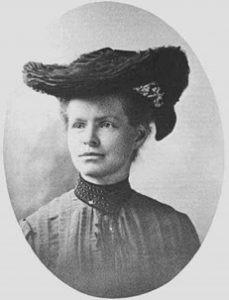 From time to time I find it inspiring to write about women from the past with amazing accomplishments who I have never heard of. Today I’m writing about the first Black woman to earn a medical degree in the United States, a woman who discovered the universe, a woman whose research on genetics overturned hundreds of years of misconceptions, and the woman who built pianos for Beethoven. Have I got your attention?
 The Wall Street Journal reports that three-fourths of the
  I believe it is important to check in on top stories in other parts of the world on the topic of gender issues in the workplace to balance out our US-centric media. Today’s headlines take place in France, Japan, and Nigeria.
 New research, collected and released by the Bureau of Labor Statistics and analyzed by the Brookings Institute, shows that in 2020, the mothers of young children spent about
  I am the oldest of four children. After my mother gave birth to me and my sister, she had two late-term miscarriages, and I remember her intense sadness and depression after each loss. Even though she went on to deliver two more healthy babies several years later, the sadness never fully lifted for her. Twenty years later, my father asked me to help him help her. We talked with her about the fact that she had never been able to grieve the two lost babies. It was simply taboo at the time for her or anyone else to bring up the topic. She agreed that it might be helpful to her to have a formal acknowledgment of her lost babies. We had a funeral and placed grave markers in our family plot inscribed with their names and birth/death dates. She shared that this ritual did help her a lot.