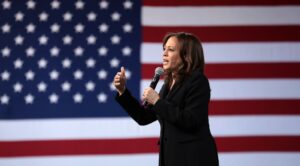
 Let me be clear—I am a white woman who is thrilled that Kamala Harris was chosen to be the vice presidential running mate to Joe Biden. I noticed the giddiness of black women and men on the days following Harris’s appointment. Every black person interviewed on television over subsequent days seemed to be smiling broadly and almost speechless with joy. The same seemed true for my black friends and colleagues. I also noticed that her appointment occurred just days before the one hundredth anniversary of the passage of the Nineteenth Amendment in 1920, giving women the right to vote. In fact, the Nineteenth Amendment gave only white women the right to vote, and it took another fifty years for women of color and other marginalized groups to get the vote with the passage of the Voting Rights Acts of 1965 and 1970.
Harris focused a lot in her acceptance speech at the Democratic convention on the fact that she is a black and Asian woman. Since then I have heard solidly Democratic white people say they felt left out of all the excitement of her speech and wondered, “What about me? Don’t white people count? If she becomes president some day, will white people count?” But she has a really good reason for her emphasis and joy about her appointment as a black and Asian woman.
Black women finally feel seen and valued, which has been a long time coming. An editorial in the New York Times explains that black women have been erased from the history of the suffrage movement and “the contributions of African-American women like Frances Ellen Watkins Harper, Mary Church Terrell, Sojourner Truth and Ida B. Wells” were rendered invisible. Black women were also erased when
- After working tirelessly for decades along with white women to gain the vote and abolish slavery, white women turned their backs on black women when the time came to press for the passage of the Nineteenth Amendment and made a deal with white men to leave black women out. White women even told the black suffragettes that they had to march at the back of the parade for the final big rally, which the black women refused to do.
- The Seneca Falls Convention of 1848 concerned itself with many issues of interest to only white women and ignored many concerns of black women.
- The white suffrage heroines Elizabeth Cady Stanton and Susan B. Anthony controlled the narrative of the suffrage movement by publishing a six-volume collection called History of Woman Suffrage, which left out the contributions of black women to the movement. Stanton and Anthony described the movement as one that implicitly “defined women as people who were white and middle class.”
Finally, because it took another fifty years for black women to gain the right to vote, they feel that they finally have a voice in our democracy. They feel their issues and talents have been taken for granted and largely ignored by the Democratic party between elections, and the appointment of Kamala Harris feels like a significant recognition.
In other articles on suffrage by Gail Collins of the New York Times and Monica Hesse of the Washington Post, Collins and Hesse discuss many examples of the threat perceived by white men of white women having the vote and their successful attempts to block progress on issues of concern to white women. The effort to block access to voting for black women and men continue to this day. In addition, women have not joined forces to make progress on issues of concern to them, such as pregnancy protections, healthcare, and childcare, to the extent possible. Perhaps the appointment of Kamala Harris as the vice presidential nominee will become the turning point when we work together for change.
Photo courtesy of Gage Skidmore (CC BY-SA 2.0)
 When my mother was diagnosed with brain tumors and given four months to live, I did what most of us would do if we could. I, along with my sister, temporarily moved 1,200 miles to take care of her for the remaining months of her life. Fortunately, both my sister and I were self-employed at the time. I could do some, but not all, of my work remotely. I still had to cut back to part time and reduce my income, but I was able to do that and had a supportive partner back home.
 In so many ways, the coronavirus pandemic has exposed a deep disregard for working mothers. In a previous article I wrote about the
  It is important to notice good news for women leaders when it happens. I recently wrote about
  It seems likely that some changes in the way we work resulting from the Covid-19 pandemic will be permanent. In a previous post, I summarized research emerging about the
  A new report from the Brookings Institution notes that the
  In the midst of a lot of terrible news and hardship for many people in this time of the Covid-19 pandemic, some good news for women’s leadership has emerged in the publishing industry and in politics. Alexandra Alter and Elizabeth A. Harris, writing for the New York Times, report that in the publishing world, “Over the last year, deaths, retirements and executive reshuffling have made way for
  Politicians and employers like to talk about the importance of “family values,” but the pandemic has revealed that families are not really valued at all. Two recent policy decisions in New York City, described by Deb Perelman of the New York Times, offer an example of the
 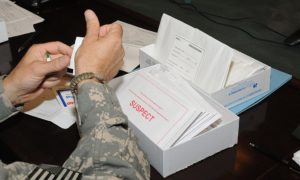 It has never been easy for women to report being raped to the police. In the early 1970s, I was one of many women in my community who volunteered to be rape crisis advocates for the state and local police departments. The police were supposed to notify us when a woman reported being raped, and they were not supposed to talk to the woman without one of us present. This agreement came about when feminist activists created a scandal by publicizing, as reported by Pagan Kennedy of the New York Times, that
  As everyone knows by now, the number of people unemployed in the United States because of the pandemic is staggering, the highest since the Great Depression of the 1930s. Alisha Haridasani Gupta, writing for the New York Times, notes that for the first time in decades it is
