
The New Global Plan for Gender Equality

I remember the Beijing World Conference on Women in 1995 when Hillary Clinton created a global scandal by declaring, “Women’s rights are human rights.” Her speech was considered so outrageous that the Chinese government cut off her microphone in the middle of her speech. Clinton was the first lady at the time, and the United States government asked her to “soften” her speech, which she refused to do. There had never been a global summit on women’s rights before, and I remember hanging on every word reported about the proceedings and wishing I could be there too. As noted by Alisha Haridasani Gupta and Emma Goldberg of the New York Times, by the end of that summit, “Almost every country in the world had committed to the ‘full and equal participation of women in political, civil, economic, social and cultural life.’” This commitment was considered a big deal but also toothless and unfunded. That was the last time, twenty-six years ago, that a global summit on women’s rights was convened—until now.

At the end of June 2021, the Generation Equality Forum was convened by UN Women, political leaders, corporate executives, and grassroots activists in Paris. Gupta and Goldberg note that organizers of this forum created a system designed to avoid the mistakes of the 1995 convening that produced a platform with no concrete plans and no funding. For the 2021 forum, the organizers required that in advance, “all participants—whether U.N. member states or grass-roots activist organizations—would be required to submit clear, measurable proposals that fell under any of the six main policy areas:

  • Eliminating gender-based violence
  • Advancing women’s economic empowerment
  • Enhancing access to sexual and reproductive health care
  • Increasing gender parity in private and political spheres
  • Investing in gender-focused climate change solutions
  • Narrowing the gender digital divide”

Because countries have different starting places, each country was encouraged to develop measurable proposals to commit to. If the proposals were not measurable, the organizers sent them back to be improved before the event.

President Emmanuel Macron of France pointed out that COVID-19 turned out to be “’an anti-feminist virus’ that pushed more women around the world into poverty, nudged more girls out of school and locked women in with their abusers.” Because of the pandemic and these negative impacts for women and girls, a sense of urgency prevailed that resulted not only in creative and ambitious gender-focused policy proposals and program plans but also pledges of $40 billion to fund these policies and programs. These pledges include $2.1 billion from the Bill and Melinda Gates Foundation, cementing the longtime commitment of Melinda French Gates to gender equality. Also included is $420 million from the Ford Foundation.

We have a long way to go to reach gender equality globally. As noted by Phumzile Mlambo-Ngcuka, executive director of UN Women, “Women are just one-quarter of those who are managers, they are one-quarter of parliamentarians around the world, they are one-quarter of those who negotiate climate change, less than one-quarter of those who negotiate peace agreements. One-quarter isn’t equality. Equality is one-half.”

Some surprise commitments came forward during the proceedings. Kenya produced an innovative plan to counter gender-based violence that other African nations adopted as a template for their plans. The United States came in with a strong set of commitments at the last minute. The United States had not signed up to participate under President Trump, and the Biden administration only finalized the US commitments a few days before the forum convened.

Hillary Clinton was in Paris. How exciting that must have been for her. I wish I could have been there too.


Photo courtesy of Gage Skidmore (CC BY-SA 2.0)
Women-Led Fortune 500 Companies and Social Justice Promises: Update

The deaths of George Floyd, Breonna Taylor, and Ahmaud Arbery, among other Black Americans killed by police or white citizens in 2020 and captured on video, triggered an outpouring of public support for the Black Lives Matter (BLM) movement in the summer of 2020. The obvious injustice of the killing of unarmed Black people like Floyd, Taylor, and Arbery, witnessed over and over again on the daily newscasts from the video recordings of their deaths, tipped the scales of outrage in the American public. Mariel Padilla, writing for the 19th, reports, “Corporate America responded on an unprecedented scale.” One-third of Fortune 1000 companies made public statements about the need for racial equity, which is itself unusual for corporate America. Hundreds of companies made financial pledges to support the BLM movement that totaled close to $200 billion, according to McKinsey, to combat systemic inequity and racism in our society. Padilla and the 19th asked, “Where did the money go?” and did women-led companies perform any differently in the actual payout of financial commitments to the BLM movement? This is what they found.

The 19th conducted research in 2021 on the forty-one women-led Fortune 500 companies in the United States. They found research showing that half of women-led companies made a profit during the pandemic despite the economic fallout, which is supported by earlier research showing that women-led companies perform better financially. Nonetheless, Padilla notes that no research had been done on whether women-led companies behave differently regarding their social impact performance. The 19th found that thirty of the forty-one women-led companies released statements supporting racial equity after the Floyd murder and identified nearly $2 billion in pledges from these women-led companies. One dozen of these companies responded to research requests from the 19th about the actual payouts of their $22.5 million pledges. Here are some highlights:

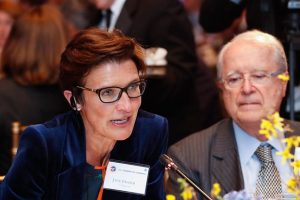
  • Citigroup, now headed by Jane Fraser, made the largest pledge of $1 billion to “help close the racial wealth gap and increase economic mobility” over the course of three years. No figures are available as to how much has been spent to date.
  • UPS, led by Carol Tomé, pledged $4.2 million and one million employee volunteer hours of service. Padilla reports that UPS overshot its $4.2 million commitment, giving more than $6.3 million to Black initiatives and communities in 2020.
  • Clorox pledged $2.5 million in 2020 and delivered.
  • Edward Jones met its $1.2 million pledge.
  • Northrop Grumman met its $1 million pledge and matched $728,000 in employee contributions.
  • PG&E made donations totaling $1 million.
  • Thrivent made $2.8 million of its $3 million commitment so far.
  • Vertex Pharmaceuticals disbursed $3.4 million of its $4 million pledge as of June 2021.
  • Rite Aid has distributed $1.2 million of its $2 million pledge as of June, with the rest to be distributed by the end of 2021.

The data is too incomplete to be able to say that women-led companies are walking their talk on paying out their pledges to the BLM movement at a rate higher than companies led by men, but a new Fortune initiative that ranks companies based on fourteen diversity, equity, and inclusion (DEI) metrics found that five women-led companies were ranked in the top twenty for DEI performance. This is a significantly higher proportion (25 percent) of women-led companies, which represents only 8 percent of the Fortune 500. This bodes well for women-led companies, according to new research showing that companies dedicated to social goals have a better financial performance.

Padilla shares three actions that companies can take to move beyond just making performative statements (statements that acknowledge inequity but take no substantive actions to address the cause of the inequity):

  1. Assess the situation, the climate, their employees and stakeholders and their culture.
  2. Increase the knowledge and understanding of their employees on the issues.
  3. Take action by setting goals and implementing them.

It is important for us as consumers, investors, and stakeholders to hold companies accountable for living up to the promises they make about addressing social issues. Otherwise, they may be all talk and no action.


Photo courtesy of Palácio do Planalto (CC BY 2.0)

More Sounds of the Glass Ceiling Breaking for Womxn

Let’s take this time to mark another moment of “firsts” for women, adding to the others we have recently acknowledged. We should not take these breakthroughs for granted because as Claire Cain Miller points out,
  • They are a long time coming.
  • Representation in positions of influence can break down stereotypes about who can be a leader.
  • Research from around the world has demonstrated that the role model effect, summarized as “if you can’t see it, you can’t be it,” is especially strong for young girls.
  • The identities of leaders shape which issues they pay attention to and how they do their job.

Here are a few recent cracks in the glass ceiling:

Sally Buzbee has been named as the first woman to serve as the Washington Post’s editor since the paper started publishing in 1877. Rachel Abrams and Katie Robertson, writing for the New York Times, report that Buzbee has been a reporter, executive editor, and senior vice president of the Associated Press, where she spent her entire career until being tapped by the Post for the top job. It is often true that women do not get the top job in an organization until the organization is in crisis, but this is not the case at the Washington Post. For once, Buzbee is being promoted into the top job of an organization restored to health under the ownership of Jeff Bezos, who bought the newspaper in 2013. The Post is now a digitally savvy news operation second only in subscribers to the New York Times.

Min Jung Kim will become the first woman and the first person of color hired to be the director of the acclaimed Saint Louis Art Museum, founded in 1879. Jane Henderson, writing for the Saint Louis Post-Dispatch, reports that Min Jung Kim, age fifty-one, was born in Seoul, South Korea, and earned her master’s degree in art history at the Courtauld Institute of Art, University of London, England. She previously worked at a number of art institutions, including for more than a decade with the Guggenheim Foundation in New York.

Gina Chua, promoted recently to the new executive editor role at Reuters, became the most senior transgender journalist in the country when she came out as transgender to her colleagues in December 2020. Katie Robertson of the New York Times quotes Chua, age sixty, as explaining that she took time away from the office during the COVID-19 pandemic to prepare to live and present “as what I know to be my true self 100 percent of the time.” In another first, Robertson explains that Chua reports to Alessandra Galloni, “who was named editor in chief of Reuters in April and is the first woman to hold that role in the news agency’s 170-year history.”

These are some of the sounds of the glass ceiling breaking. Let’s mark them and celebrate them.


Photo courtesy of Oh Paris (CC BY 2.0)

Why We Need More Women in Elected Leadership

In previous posts, I wrote about women leaders who have made a difference because they are women. In one post, seven women heads of state around the world demonstrated clear and measurable differences in effectiveness compared to men leaders at the beginning of the pandemic by

  • Telling the truth to their people (Angela Merkel of Germany and Jacinda Ardern of New Zealand)
  • Being decisive (Tsai Ing-wen of Taiwan)
  • Using technology (Katrín Jakobsdóttir of Iceland)
  • Showing empathy and compassion (Mette Frederiksen of Denmark and Erna Solberg of Norway)

In another post, I wrote about calls by feminist lawmakers for a feminist domestic and foreign policy agenda that would include the following on the domestic front:

  • Fifteen-dollar minimum wage for economic security
  • Hazard pay for essential workers during public health crises
  • Universal paid family and medical leave
  • A robust safety net
  • Subsidized childcare
  • Domestic violence prevention funding

A feminist foreign policy would do the following:

  • Prioritize the care economy and the health and well-being of the most marginalized
  • Shift priorities from military security and business profits to health and personal safety
  • Emphasize international cooperation in health family planning, gender-based violence, and climate change
  • Invest in female farmers and indigenous women who organize to salvage ecosystems and foster resilience

A post about Christine Legarde, the first female president of the European Central Bank (ECB), noted her feminist vision for the ECB, which represents a significant departure from the visions of previous presidents. Her vision aims to

  • Fight climate change
  • Encourage global cooperation
  • Strengthen the credibility of international institutions

In Argentina, the new president, Alberto Fernandez, inaugurated in December 2019, has implemented a feminist agenda, led by three strong feminists he appointed, to

  • Legalize abortion
  • Build more preschools to help mothers get back to work after the pandemic
  • Fight gender violence
  • Pay a family income to recognize unpaid care work in the home
  • Professionalize care work through higher pay and respect

Liuba Grechen Shirley, writing for Ms. magazine, points out that while we need more working mothers in elective office to bring voice to the issues and interests of families, the US electoral system is not set up for mothers who want to run. Running for office is time consuming, and affordable childcare is not available. We need more mothers in elected office to push for policies that support working families, such as

  • Affordable childcare
  • Paid family leave
  • Social acceptance of working mothers

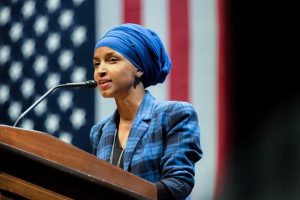
Shirley notes that women, especially single mothers who want to run for office cannot afford to do so without childcare. Until recently using campaign funds to pay for childcare while campaigning was illegal. It is now possible to do so at the federal level but not for state and local campaigns. Representative Katie Porter is the first single mother to serve in Congress, and she has been able to fight for a living wage for all Americans and propose legislation to double the pretax amount families can set aside for childcare and eldercare. Representative Ilhan Omar, the first Somali American to serve in the House, has advocated for bills supporting affordable housing, lowering student debt, and much more.

We need more women like Porter and Omar in Congress. While approval has been recently granted for candidates for federal office to use campaign funds to pay for childcare, this decision does not apply to state and local offices. Being able to use campaign funds for childcare would change everything for mothers, according to Shirley, and would benefit families in the long run.

Find out whether your state legislature is addressing this issue. The Vote Mama Foundation has succeeded in getting fifteen states to enact this legislation at the state and local levels and is hoping to get approval for campaign funds to be used for childcare during campaigns in all fifty states by 2023. Contact them to find out what you can do in your state. Women’s voices are needed at every level of government.


Photo courtesy of Lorie Shaull (CC BY-SA 2.0)