
More Barriers Fall for Women in Publishing and the Military

It is important to notice good news for women leaders when it happens. I recently wrote about barriers for women that came down in publishing and politics. These small cracks in the glass ceiling are beginning to accumulate. Now there are new cracks to report as additional barriers fall for women in publishing and the military.

In publishing, Rachel Abrams of the New York Times writes that Hearst Magazines named Samira Nasr as the next editor of Harper’s Bazaar. Abrams notes that Nasr will be the first woman of color to hold the top job at the 153-year-old fashion publication. Abrams also points out that “Ms. Nasr’s appointment . . . comes at a moment of upheaval in the media industry. Journalists, frustrated by some of the coverage of the protests after [George] Floyd’s killing, have been emboldened to question issues of systemic racism and bias in their own institutions.” Staff at a variety of publishing institutions have been protesting discrimination against Black women and other women of color. It seems that the publishing industry is finally listening.

In the military, the first woman has earned the title of Green Beret since the Pentagon opened all combat jobs to women in 2016. The soldier’s name is being withheld because she is now a member of the secretive Special Operations community, and operational security must be maintained. Thomas Gibbons-Neff writes that “the Green Berets were one of the last assignments in the Army without any women.” The crushingly high physical standards of the Green Berets were considered unattainable for women. That barrier has been breached.

Let’s keep an eye out for good news for women, such as the selection of a woman of color as vice president on the Democratic ticket, and share it so that all the bad news currently coming out in our world does not drown out the good.


Photo by Staff Sgt. William Howard (PD)
Five Ways Women Could Benefit from the Pandemic

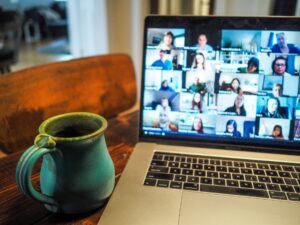
It seems likely that some changes in the way we work resulting from the Covid-19 pandemic will be permanent. In a previous post, I summarized research emerging about the differential impact of the pandemic on women who are parents. Family caregiving, previously expected to be kept private and not mentioned at work, has been on full display as everyone works from home during the pandemic and children crawl into parents’ laps during online meetings. In addition, research reveals an unequal distribution of work within heterosexual couples, with housework, childcare, and homeschooling responsibilities falling predominantly on women; a dramatic reduction in publications for women in academia; and a higher incidence of women reducing their work hours during the pandemic with possible long-term career consequences.

Alison Goldman, writing for The Lily, suggests that organizations can learn from the experience of this pandemic about how to create more supportive and inclusive office cultures. She cites a study by Catalyst showing that 71 percent of working people believe that Covid-19 will make a positive impact on gender equality in the workplace. Specifically, she notes, “It’s possible to incorporate inclusivity focused work-from-home revelations into office culture once things start returning to ‘normal,’ but we need to be intentional about it.”

What are the five changes that Goldman suggests that could make a positive difference in gender equality at work?

  1. Talk more about everyone’s our personal life. Instead of trying to hide the fact that they have children, as they felt pressured to do before the pandemic, working parents now have their family lives in the open as they work from home. Goldman cites Daisy Dowling, founder and chief executive of Workparent, a consulting firm focused on working parents, as saying that “making the personal professional” can build empathy and breed communication about what is most helpful for each individual on a team. In fact, Dowling notes, managers can learn to ask open-ended questions to learn more about the needs of their team members, such as “Are there any ways in which I’d be helpful to you as you think about staying at this organization for the long-term?”
  2. Reconsider the company approach to telecommuting. Many organizations have been surprised by how productive workers are when they work from home. Not all jobs can be done by telecommuting, but a surprising number can. Remote work also allows for more racial diversity in hiring when the company is not physically located where diverse populations live. Physical location no longer needs to matter for hiring. Telecommuting should become a more prevalent way of working, which can greatly benefit both working parents and organizations.
  3. Consider more flexible work options. Flexibility can mean more than just working from home. Work hours and days can also be flexible to accommodate family life. The author goes back to her suggestion of organizations and managers directly asking their employees what would be helpful to them to be most efficient. Many women I know cannot imagine their bosses ever showing this kind of interest and concern about the challenges of balancing work and family life. Unsupportive bosses are the reason many talented women leave companies.
  4. Provide management training for how to support remote workers and working parents. More than ever, managers need to know how to support today’s workforce for maximum productivity. Goldman notes that “managers are spending more time on employee care” and development. Many managers don’t have these skills.
  5. Offer support for workers outside of the office. This includes providing a budget for setting up a home office and childcare.

Parents, particularly working mothers, could benefit a great deal from these changes. Working mothers would not have to damage their careers by cutting back to part-time work, financial support for childcare could make working full-time more possible, and organizations would be able to keep talented workers who might otherwise have to leave. Working fathers would also benefit and could be more available and inclined to share housework, childcare, and homeschooling equitably without damaging their careers. These changes could be a win-win for all of us.


Photo by Chris Montgomery on Unsplash

How Gender Inequality and the Pandemic Affect Retirement for Women

A new report from the Brookings Institution notes that the status of women in retirement has not gotten much attention. The authors of this report, Grace Enda and William G. Gale, point out that significant differences exist in economic status for women in retirement compared to the status of men. They identify a range of factors that contribute to this gender inequity, including that

  • Women earn 81 percent of median men’s earnings for similar full-time work. This number obscures the larger pay gaps for women of color.
  • Lower lifetime earnings lead to lower Social Security benefits for women. Women receive benefits that are, on average, 80 percent of those men receive.
  • Women with one child earn 28 percent less on average over their careers than a woman with no children. Each additional child reduces a woman’s earnings by 3 percent.
  • The motherhood penalty—when career interruptions occur after the birth of a child—result in an average of reduced Social Security benefits of 16 percent. Each additional child increases the gap by 2 percent.
  • Caregiving for elderly parents and relatives usually falls on women more than men. People who leave the labor force early to care for an elderly relative lose an average of $142,000 in wages.
  • Progressive income taxation of family income provides a disincentive to married women to stay in the paid labor force, with long-term consequences for their retirement benefits.
  • Lower lifetime earnings can reduce the amount of wealth women can accumulate from employer-sponsored retirement plans.
  • Women tend to live longer than men, often draw down their savings over a longer period, and thus are more likely to run out of retirement savings.
  • Poverty rates for women rise with age. In every marital status group, women with children had higher poverty rates than women without children, a pattern that does not hold for men.

Enda and Gale offer suggestions for policy changes that can address the retirement gap for women. They point out that labor market practices, retirement systems, and social policy are not set up to accommodate women’s life experiences. They suggest the following policy changes that can close the gaps for women in retirement:

  • A robust federal paid family leave policy and subsidized high-quality childcare will make it more tenable for women to stay in the paid work force, save for retirement, and earn Social Security credits.
  • Under a Social Security Caregiver Credit, the government would assign a value to caregiving work that would be used in calculations of Social Security benefits. The United Kingdom, France, Germany, and Sweden provide caregiver credits for public pensions, and we could do this too.
  • Reform the tax code to either provide a second-earner credit or tax individuals rather than families to improve incentives for married women to work.
  • Strengthen the social safety net by boosting Supplemental Security benefits to close the gap between Social Security income and the poverty threshold.
  • Increase support from Medicare and Medicaid for end-of-life care. These costs for a spouse often drain the savings of widows and leave them destitute.
  • Reform divorce laws.

In addition to the structural problems described in the Brookings report resulting in gaps in retirement wealth and higher levels of poverty for older women, we now have the Covid-19 pandemic exacerbating the situation. As Mark Miller, writing for the New York Times, notes, “One of the most important factors affecting your retirement security is how long you work.” But the pandemic is making it harder for people to work longer, especially older people:

  • The combined rate of unemployment and underemployment for workers over sixty-five in May 2020 was 26 percent and are much higher for older workers who are less educated, Black, and Latino.
  • The New School for Social Research forecasts that the poverty rate in retirement among workers who are now fifty to sixty will rise to 54 percent because of the pandemic economic shock. Employers do not want to hire older workers in the pandemic.

In other words, the policy changes described above are more important going forward than they have ever been—especially for women. Let’s keep the pressure on our lawmakers to legislate these policy changes.


Photo by Mariia Chalaya on Unsplash

Good News for Women in Publishing and Politics

In the midst of a lot of terrible news and hardship for many people in this time of the Covid-19 pandemic, some good news for women’s leadership has emerged in the publishing industry and in politics. Alexandra Alter and Elizabeth A. Harris, writing for the New York Times, report that in the publishing world, “Over the last year, deaths, retirements and executive reshuffling have made way for new, more diverse leaders . . . [that] stand to fundamentally change the industry, and the books it puts out in the world.”

The authors point out that while publishing’s workforce is more than 75 percent white and skews heavily female, men have often held the top jobs. Newly hired leaders in publishing bring different sensitivities and life experience. Here are some of the new leaders:

  • Dana Canedy was brought on as the publisher of Simon & Schuster. Canedy is the first Black person to lead a major publishing house.
  • Lisa Lucas was hired by Pantheon and Schocken Books to be its publisher. Lucas and Canedy are poised to become the two most powerful Black women in the literary world.
  • Reagan Arthur, named publisher at Knopf in January, states, “Ten years from now, I don’t think anything will look the same” in publishing.
  • Amy Einhorn is the new publisher of Henry Holt. She and Arthur, both white women, have a reputation for knowing what women want to read and that women tend to buy more books than men.

The world of politics had some historic wins on June 2, 2020, for women of color in primary and local elections across the country.

Elle Jones became the first African American and first woman elected mayor in Ferguson, Missouri, as reported by Jennifer Medina. Jones won a seat on the city council in 2015, the year after Michael Brown, a Black teenager, was shot and killed by a white police officer in Ferguson. With her election to the city council in 2015, she became the first Black woman elected. Her election as mayor breaks down another barrier for the people of Ferguson.

Reid J. Epstein, Jennifer Medina, and Nick Corasaniti report on primary wins for women of color. They note that in spite of the coronavirus pandemic, voter turnout surpassed 2016 levels in nearly all eight states holding primaries in early June. Iowa had the largest turnout for a June primary in the state’s history, and turnout was up 35 percent in Montana, 14 percent in New Mexico, and 12 percent in South Dakota compared with the 2016 primary. Turnout matters.

  • In New Mexico, seventeen women won Democratic primaries for the state legislature. New Mexico could have a House delegation that entirely comprises Hispanic and Native American women.
  • In Iowa, eleven women won primaries for the state house.
  • In Monroe County, Pennsylvania, Claudette Williams, the first Black woman to serve as county chair, won her primary to represent a competitive state House district.
  • In Washington, DC, Janeese Lewis George, a self-described Democratic Socialist, beat a sitting city councilman.
  • A Cuban American state legislator in Indiana won her primary. If elected, she will be the first Latina congresswoman from Indiana.
  • In Idaho, Paulette Jordan, a Native American former state representative, won her Democratic primary.

All of these primary winners must win tough races against opponents, but hope for change is looming on the horizon as voters defy attempts to suppress their votes and turn out in large numbers to elect representatives who understand their lives.


Photo by Susan Yin on Unsplash

Our National Disregard for Families

Politicians and employers like to talk about the importance of “family values,” but the pandemic has revealed that families are not really valued at all. Two recent policy decisions in New York City, described by Deb Perelman of the New York Times, offer an example of the complete lack of regard for working families by our nation’s policymakers and employers:

  • Schools will be reopened on staggered schedules to allow for social distancing in the schools, in some cases meaning that a child attends school one week out of every three.
  • Yet workers are supposed to return to their “normal” work in offices.

Perelman points out that the clear message here is “you can have a kid or a job. But you can’t have both.” In other words, Perelman states that the economy has declared working parents nonessential. She suggests that the real attitudes about families, deeply embedded in our culture, are that

  • Only one parent should be working (not the mom)
  • A working mom is selfish
  • Two working parents are bad for children
  • Offices reopening before schools, day care, and camps do is not the problem of government or employers

Allyson Waller writes of a case where a working mother was fired because her young children were making noise during business calls while she was working from home due to the pandemic. Waller cites Joan C. Williams, a law professor at the University of California’s Hastings College of Law, as saying she expects an explosion of cases involving discrimination against mothers. Waller cites research showing that in two-parent households in early April

  • About 44 percent of women said they alone provided childcare
  • 14 percent of men reported that they alone provided childcare

Because of societal attitudes and the disregard for working families by policymakers, women who are still employed run a high risk of being forced out of the workforce or into part-time jobs with long-term damage to their careers. In a previous blog post I cited the work of Patricia Cohen and Tiffany Hsu explaining that “the impact [for working mothers] could last a lifetime, reducing their earning potential and work opportunities.” Cohen and Hsu point out that reopening will compound the problem when women have to leave the workforce or move to part-time work because of a lack of childcare. They note that women could experience long-term consequences in their careers because of the following:

  • Women who drop out of the workforce to take care of children often have trouble getting back in.
  • Historically, wage losses in an economic crisis tend to be much more severe and enduring when they occur during a recession. Workers who lose jobs now are likely to have less secure employment in the future.

The authors cite Betsey Stevenson, a professor of economics and public policy at the University of Michigan, as saying, “We could have an entire generation of women” whose careers are damaged.

We need to demand that our leaders and employers do a better job of taking working families, especially working mothers, into account.


Photo by Ketut Subiyanto from Pexels