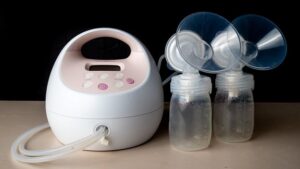
 Lawmakers who are the mothers of young children face special challenges. Barbara Rodriguez, writing for the 19th, notes that while 31 percent of legislative seats across the United States are now held by women, little research has been done to understand the experiences of those who are mothers with young children. A nonprofit organization called Vote Mama Foundation, which advocates for policies that help mothers run for office, is undertaking a large study of women lawmakers to learn more about the structural barriers women may face while running for office and functioning successfully once elected. So far, Vote Mama has heard many stories that give a sense of some of the difficulties that women face. For example, Rodriguez shares these anecdotes:
- In 2020, a Virginia lawmaker gave birth to her fifth child and was unable to bring her youngest child with her to the capitol because of the COVID-19 pandemic. On a recent workday, she drove three hours to spend two and a half hours with her family and to nurse her youngest child. This lawmaker pointed out, “You want to be present and with your family. . . . At the same time you are in the Capitol, and you want to show up every day for your constituents to do your work. It’s definitely a balancing act.”
- A Michigan senator who gave birth to a daughter in early 2021 discovered that she and other lawmakers were not eligible for the twelve weeks of paid parental leave available to state workers because the legislators were technically a different kind of employee. She took the time she needed to recover from the birth and was attacked by a conservative opponent for missing the most votes that year without noting any context of her pregnancy.
- In another example, the Michigan capitol does not have a lactation room, and lawmakers are not allowed to vote by proxy, which created challenges for parents during the pandemic.
- The Nebraska state capitol had a lactation room, but last year, a lawmaker allowed it to be turned into an office.
- In Colorado, a lawmaker was needed on the House floor for a vote. She was in her private office pumping breast milk at the time the vote was called. As a House leader, she had to be there but had no time to undo the pump and get her clothes back on. Keeping the breast pump attached to her body, she threw her suit jacket over “everything” and ran to the floor to vote. When she tweeted about the incident, a number of legislators with young children welcomed her to “our pump & vote club.”
Rodriguez quotes Michigan lawmaker Mallory McMorrow as saying, “It is a system that punishes people who are caregivers. And unless we change the system, it’s just effectively saying that this is not a place for somebody who’s a caregiver, which means that those lived experiences are not represented in the legislature.” Without these lived experiences being represented, the policies and legislation needed to support families will never be put in place.
Photo courtesy of ajay_suresh (CC BY 2.0)
 New research from the College and University Professional Association for Human Resources, reported by Emma Whitford, shows that when